Cameroon, Botswana, Congo [DRC], Lesotho, Malawi, Nigeria, South Africa, Tanzania, Zambia, Ghana
Business Action Against Corruption (BAAC)
Business Action Against Corruption (BAAC)
Mission
Reduce corruption in Africa
Goals
Business Action Against Corruption (BAAC) is an Africa-wide public-private coalition that aims at reducing corruption in Africa.
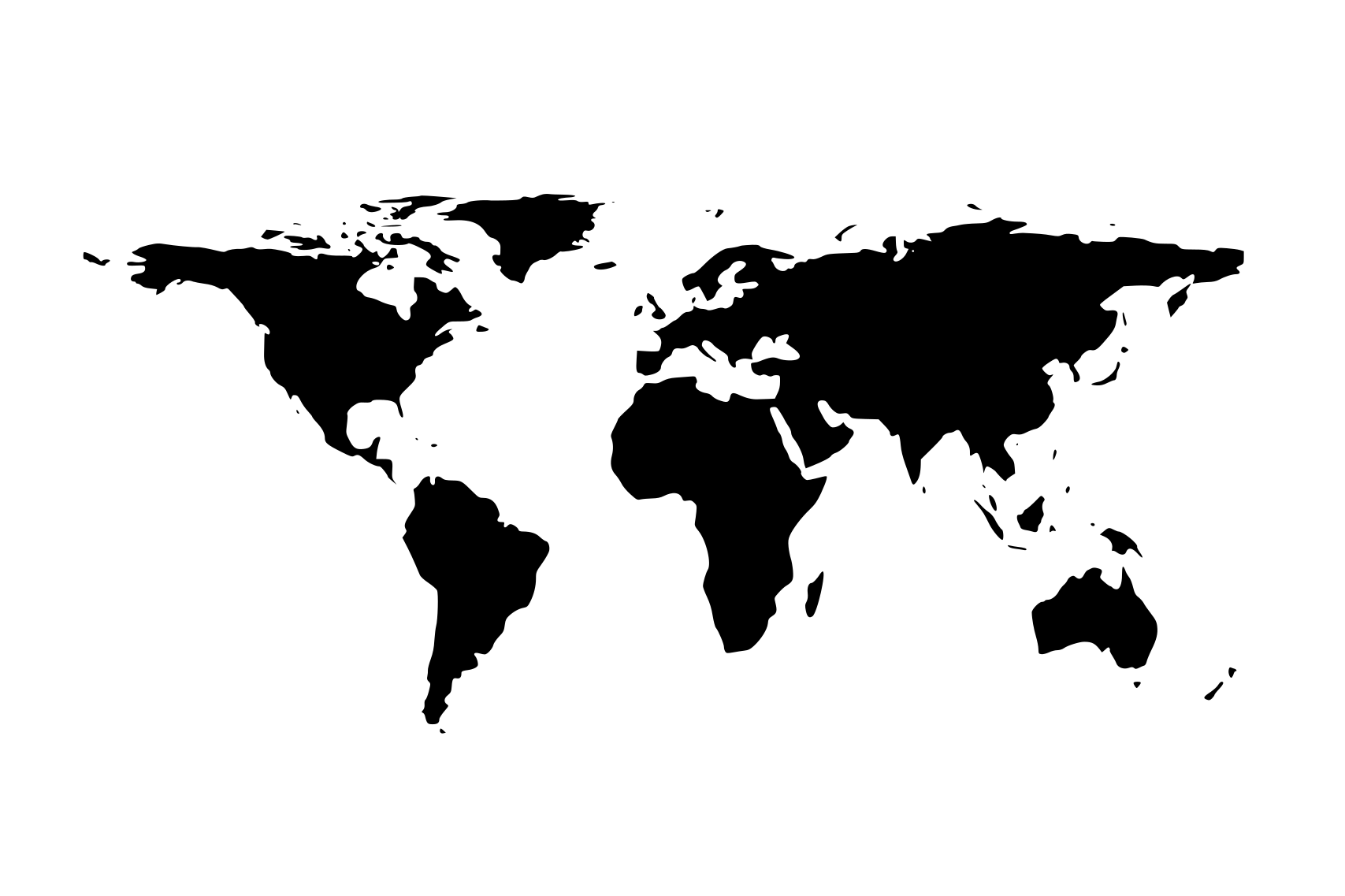
BAAC is being implemented in ten African countries: Botswana, Cameroon, DRC, Ghana, Lesotho, Malawi, Nigeria, South Africa, Tanzania and Zambia.
Stakeholders
BAAC is a working partnership between governments, civil society and business. As part of a mandate by the Commonwealth Heads of Government (CHOG), the BAAC developed from an anti-corruption initiative, which sought to bring business and government together to fight corruption.
Activities
The BAAC model seeks to find common ground between the interests of businesses, civil society and government, with the aim of building co-operative strategies to reduce corruption.
The specific aim of the initiative is to identify and implement reforms in several African countries, to help secure transparent processes around expenditures on development and improved services, thereby improving the lives of up to 200 million of the continent‟s most vulnerable citizens.
BAAC also works with continental structures, such as the African Development Bank (ADB) and the African Union Advisory Board on Corruption (AUABC), to strengthen the role of the private sector in improving governance.
This information is gathered from open-source data and in some cases has been provided by initiative facilitators. We cannot guarantee the accuracy or completeness of the information and do not take responsibility for decisions made on the basis of it. Please inform us of any errors by emailing us.
Start year
Status
- activeThe initiative or project is currently being worked on.
Countries Operations
Scope
- internationalInitiative that operates in two or more countries and the countries can be specified.
Industries
Stakeholders
- Private sectorPrivately owned commercial (for-profit) entities of all sizes, including SMEs
- Public sectorNational and sub-national, local government entities, agencies from all branches (policy-making, executive, adjudication)
- Civil societynon-governmental organisations (national or international), foundations funded by private entities, faith-based organisations, Professional associations, Industry associations, Chambers of Commerce, Local Global Compact Networks
Type
- Engagement-focused initiativeJoint declarations of intent, Joint capacity and learning initiatives, Industry-specific working groups, Joint events/awareness raising, Joint activities and integrity tools
Related Initiatives
Need help understanding the terms and categories used in this initiative?
View Methodology & Definitions